 CatFolders
| Image | Title | Type | Size | Link | Description |
|---|---|---|---|---|---|
|
|
pdf |
1 MB |
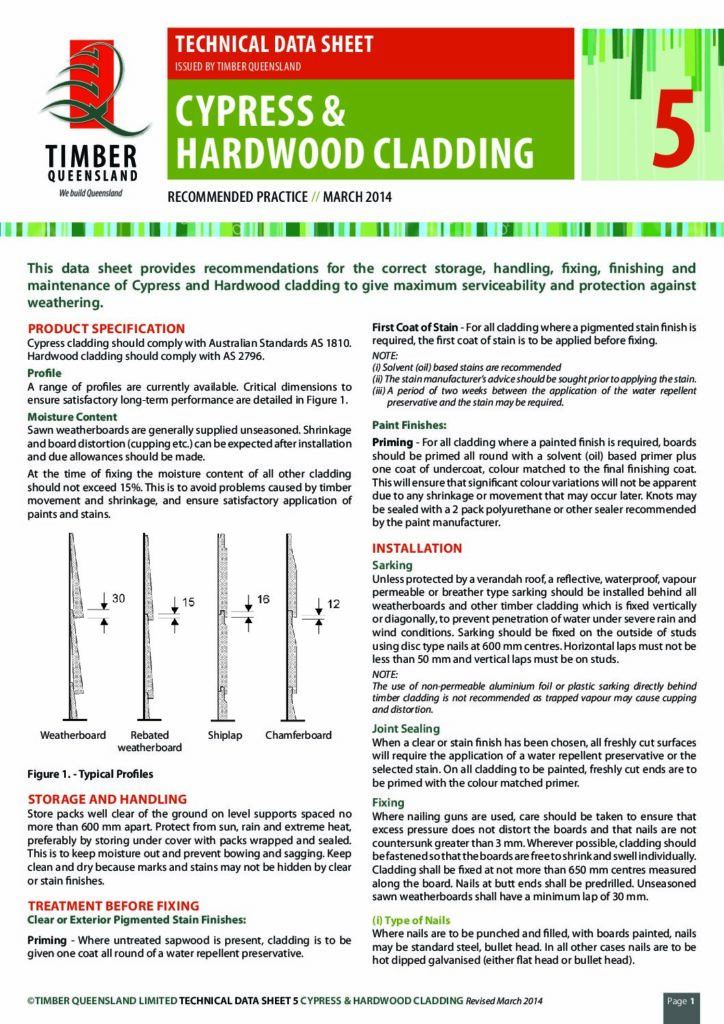
This data sheet provides recommendations for the correct storage, handling, fixing, finishing and
maintenance of Cypress and Hardwood cladding to give maximum serviceability and protection against
weathering. | ||
|
|
pdf |
993 KB |
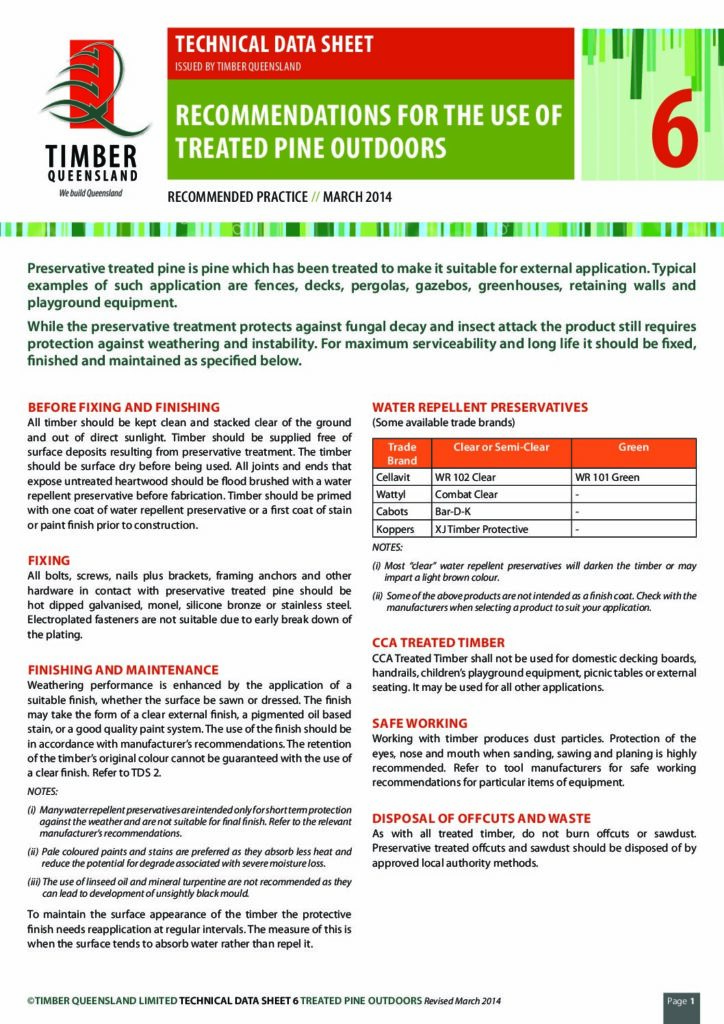
Preservative treated pine is pine which has been treated to make it suitable for external application. Typical
examples of such application are fences, decks, pergolas, gazebos, greenhouses, retaining walls and
playground equipment. | ||
|
|
pdf |
1 MB |
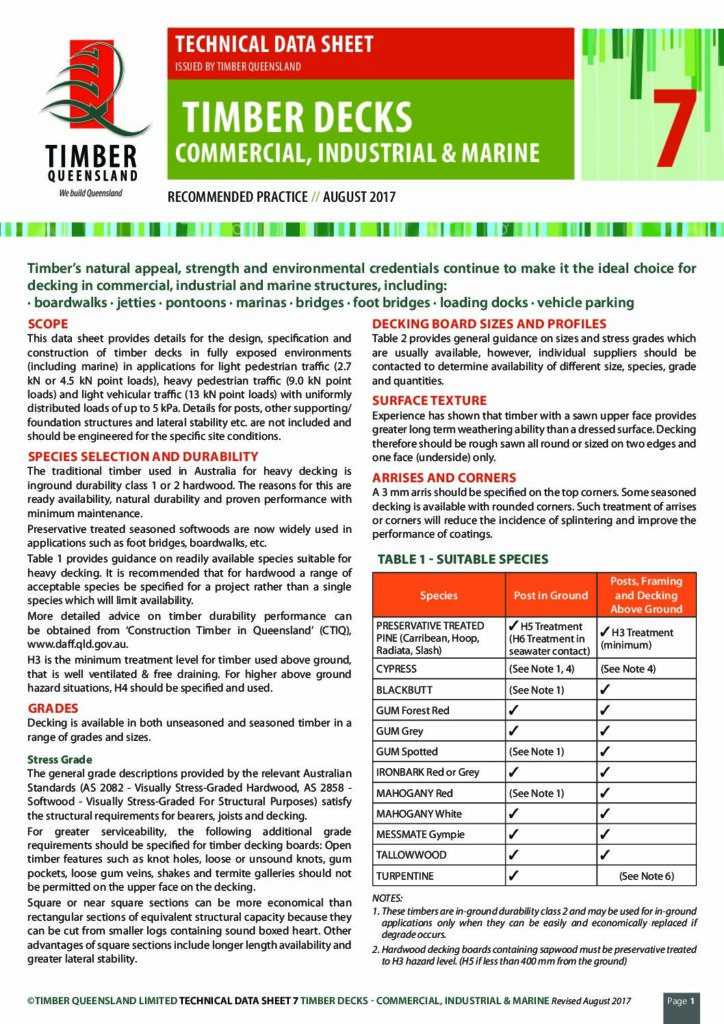
Timber’s natural appeal, strength and environmental credentials continue to make it the ideal choice for
decking in commercial, industrial and marine structures, including:
· boardwalks · jetties · pontoons · marinas · bridges · foot bridges · loading docks · vehicle parking | ||
|
|
pdf |
1 MB |
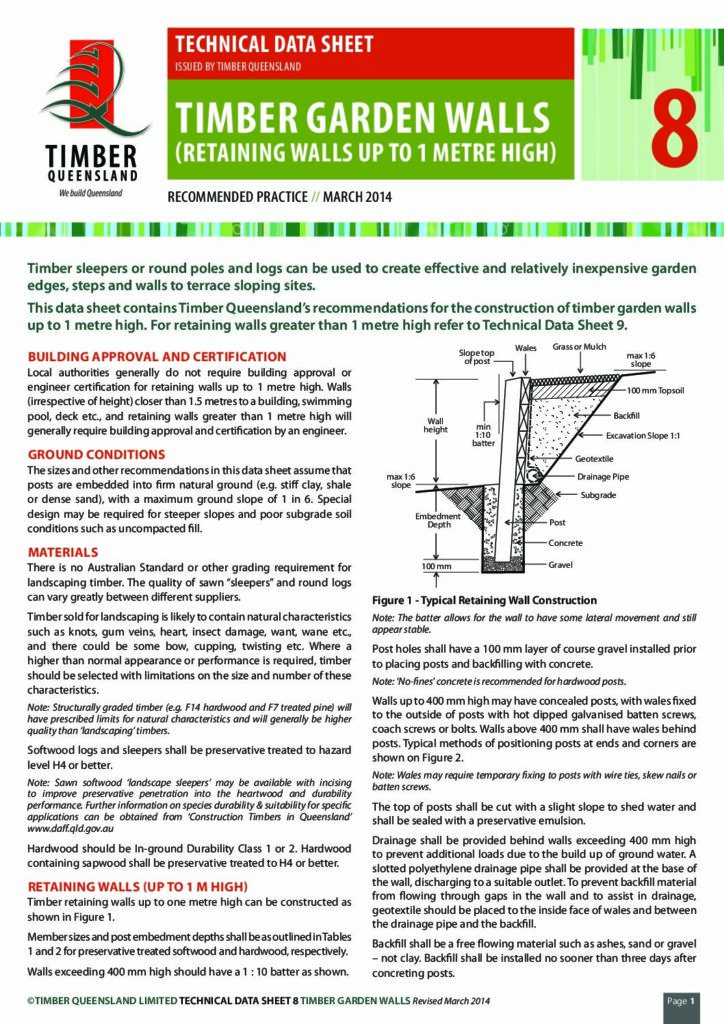
This data sheet contains Timber Queensland’s recommendations for the construction of timber garden walls
up to 1 metre high. For retaining walls greater than 1 metre high refer to Technical Data Sheet 9. | ||
|
|
pdf |
2 MB |
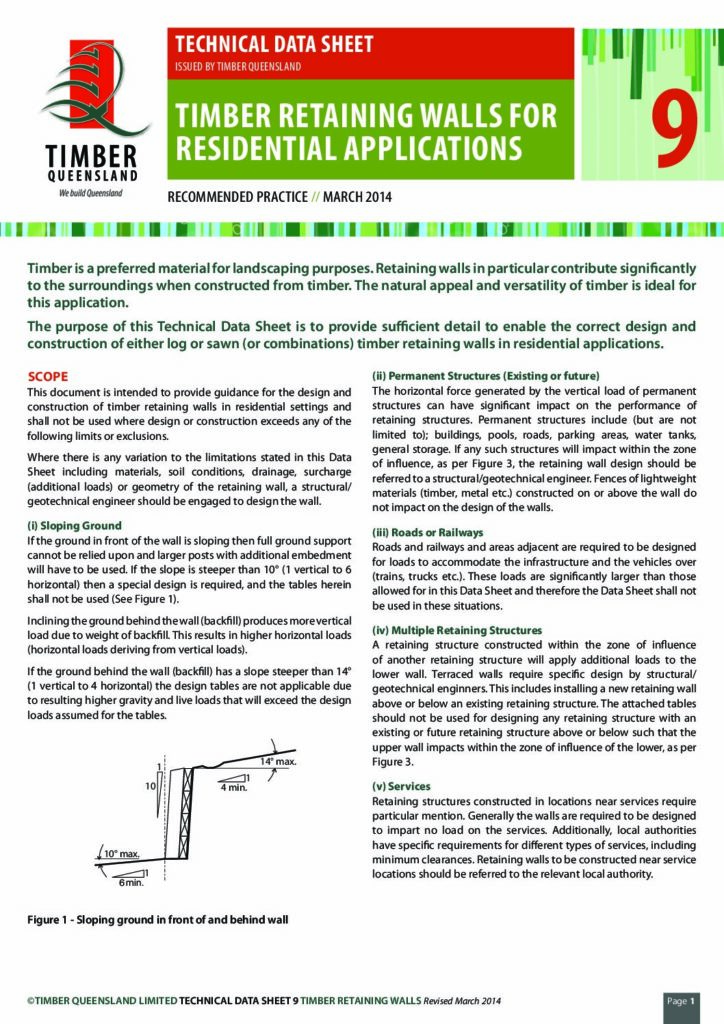
The purpose of this Technical Data Sheet is to provide sufficient detail to enable the correct design and
construction of either log or sawn (or combinations) timber retaining walls in residential applications. | ||
|
|
pdf |
1 MB |
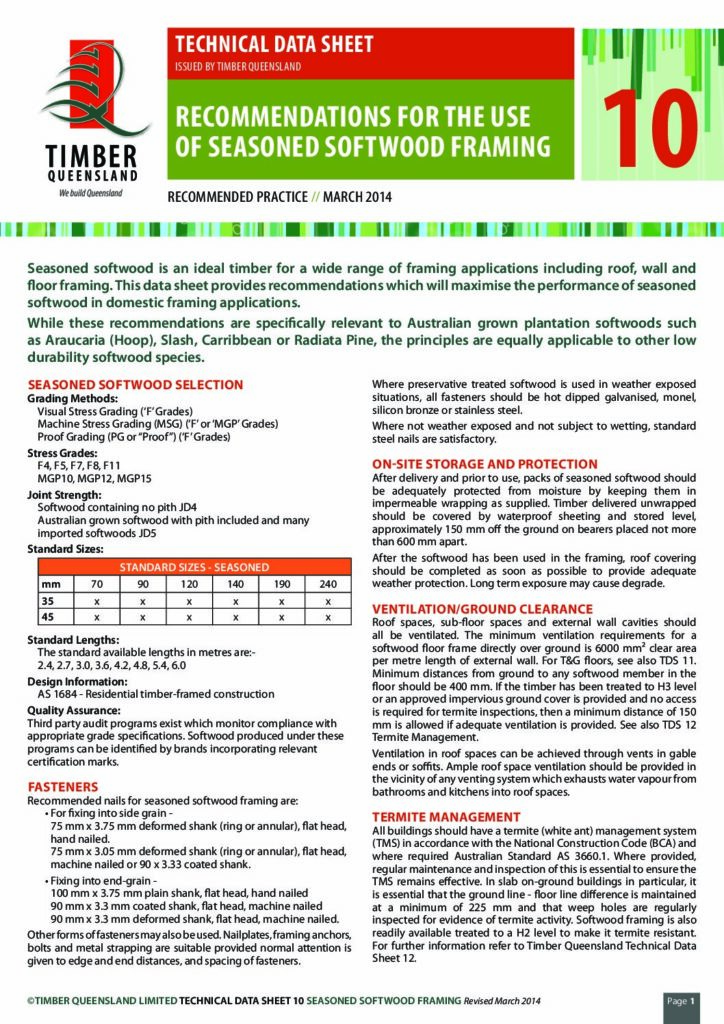
Seasoned softwood is an ideal timber for a wide range of framing applications including roof, wall and
floor framing. This data sheet provides recommendations which will maximise the performance of seasoned
softwood in domestic framing applications. | ||
|
|
pdf |
1 MB |
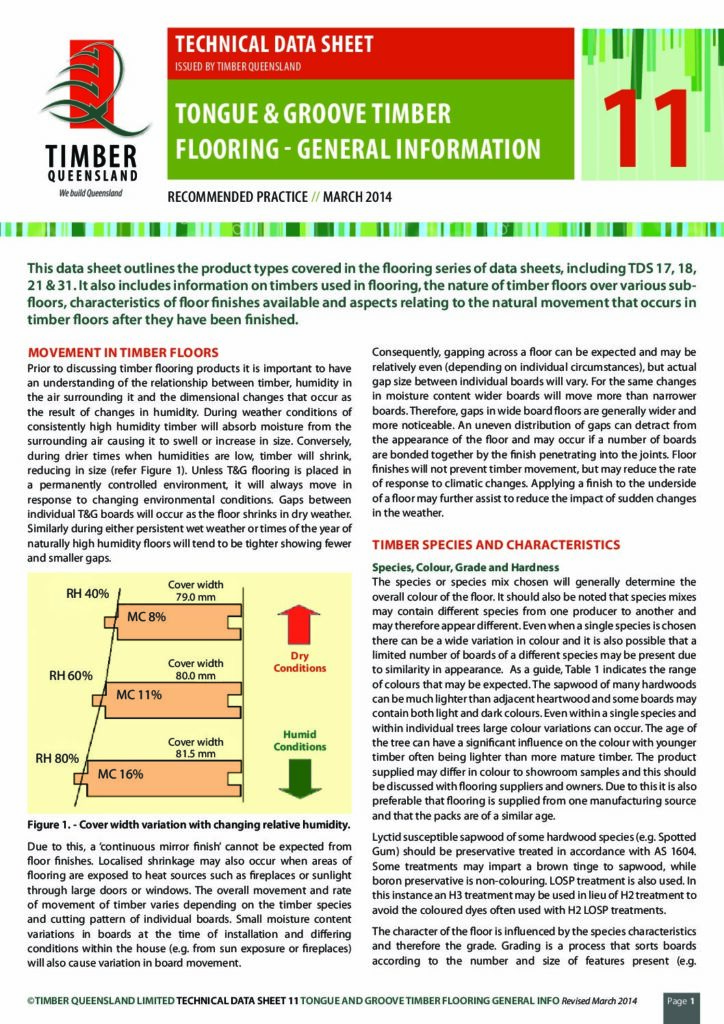
This data sheet outlines the product types covered in the flooring series of data sheets, including TDS 17, 18,
21 & 31. It also includes information on timbers used in flooring, the nature of timber floors over various subfloors,
characteristics of floor finishes available and aspects relating to the natural movement that occurs in
timber floors after they have been finished. | ||
|
|
pdf |
2 MB |
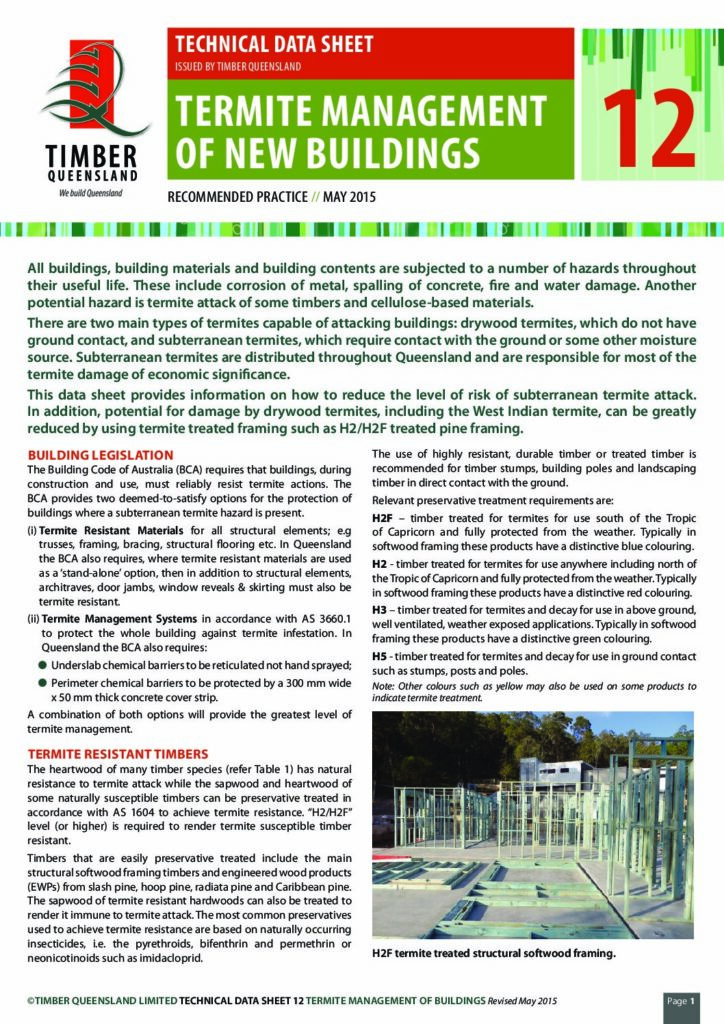
This data sheet provides information on how to reduce the level of risk of subterranean termite attack.
In addition, potential for damage by drywood termites, including the West Indian termite, can be greatly
reduced by using termite treated framing such as H2/H2F treated pine framing. | ||
|
|
pdf |
1 MB |
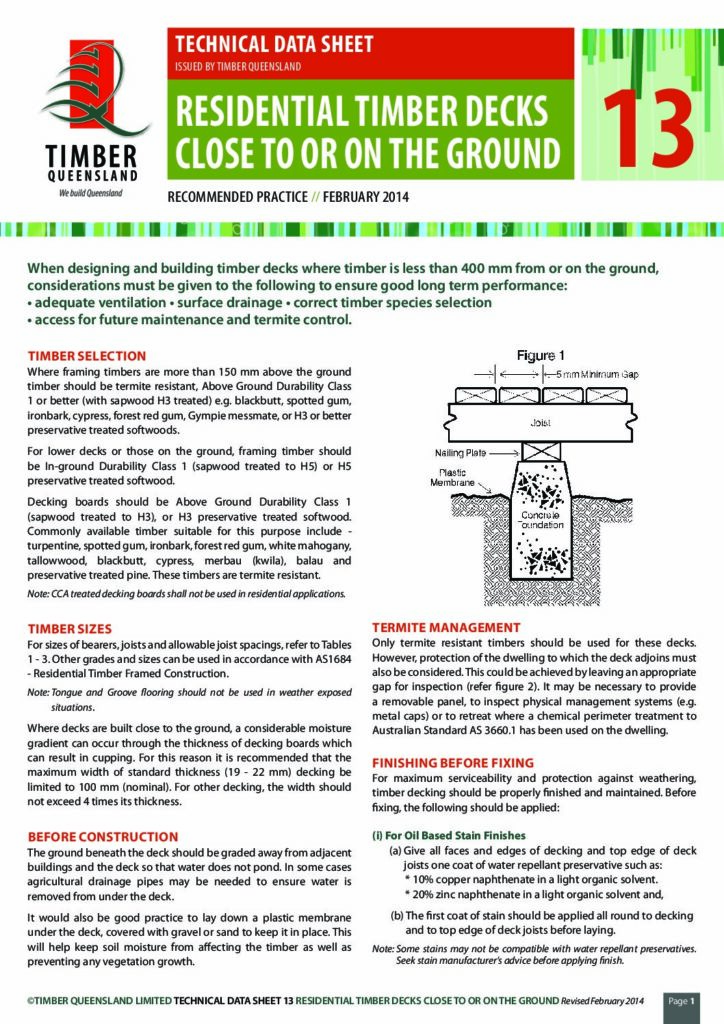
When designing and building timber decks where timber is less than 400 mm from or on the ground,
considerations must be given to the following to ensure good long term performance:
• adequate ventilation • surface drainage • correct timber species selection
• access for future maintenance and termite control. | ||
|
|
pdf |
3 MB |
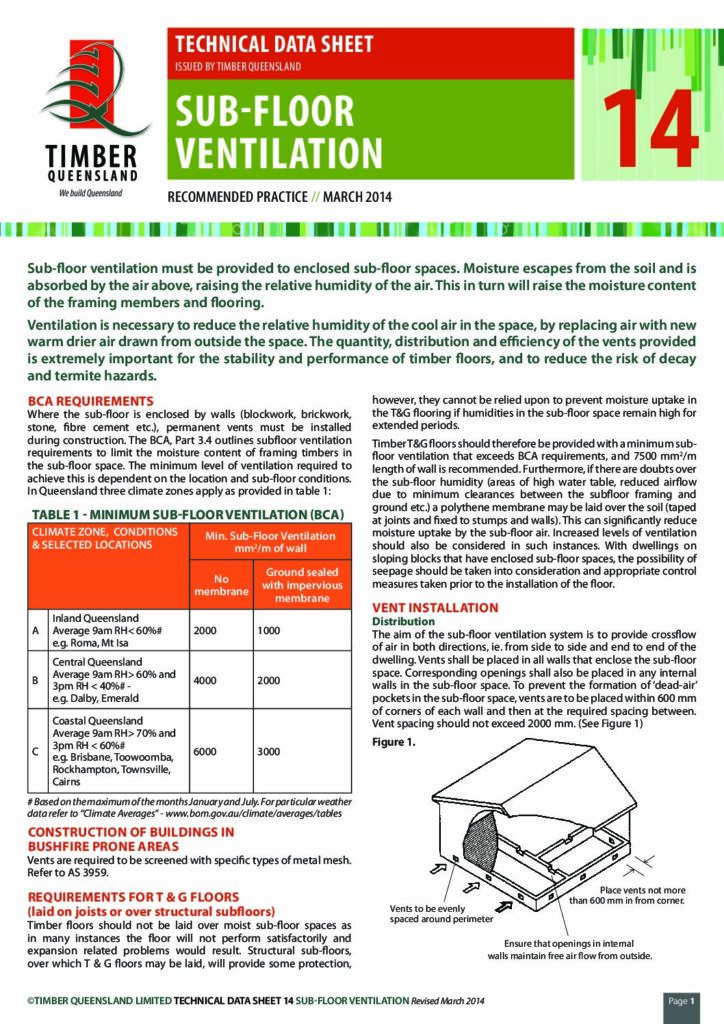
Sub-floor ventilation must be provided to enclosed sub-floor spaces. Moisture escapes from the soil and is
absorbed by the air above, raising the relative humidity of the air. This in turn will raise the moisture content
of the framing members and flooring. | ||
|
|
pdf |
1 MB |
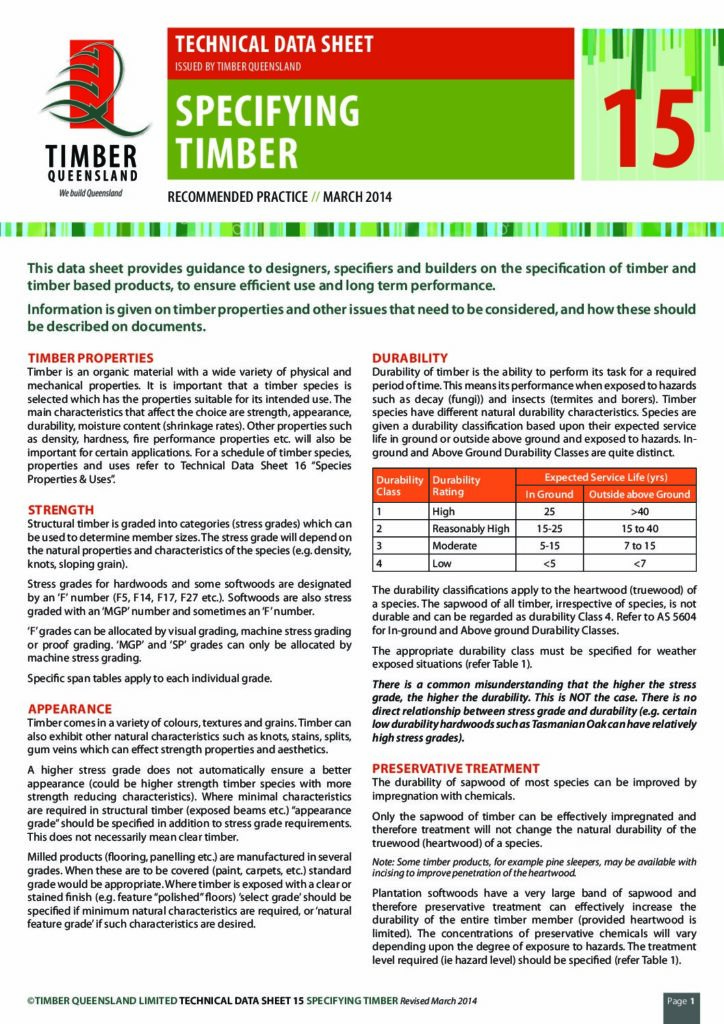
This data sheet provides guidance to designers, specifiers and builders on the specification of timber and
timber based products, to ensure efficient use and long term performance. | ||
|
|
pdf |
1 MB |
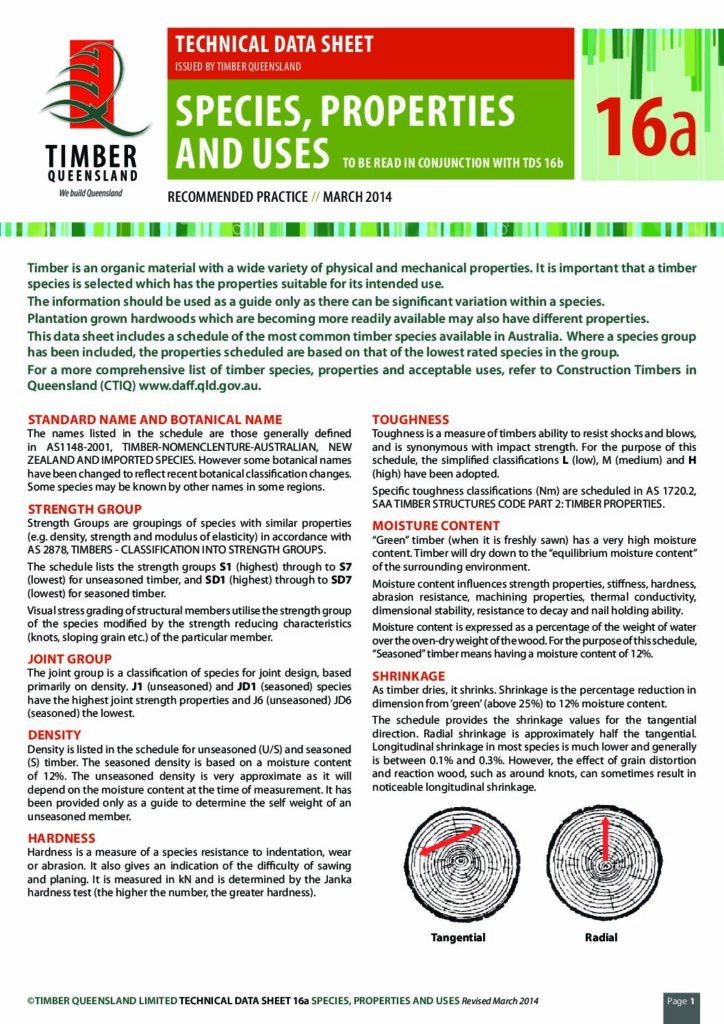
This data sheet includes a schedule of the most common timber species available in Australia. Where a species group
has been included, the properties scheduled are based on that of the lowest rated species in the group. | ||
|
|
pdf |
1 MB |
Species, Properties and Uses Tables | ||
|
|
pdf |
2 MB |
This data sheet outlines aspects that should be considered prior to the installation of a timber floor. It
includes aspects of storage and handling, evaluating the conditions in which the floor is to be laid and
measures that may need to be taken prior to installation. | ||
|
|
pdf |
2 MB |
This information sheet outlines the recommended practices for laying timber strip floors over timber and
engineered timber joists (it does not include steel joists), structural sub-floors such as plywood, particleboard
and over concrete, but does not include direct adhesive fix to slabs. | ||
|
|
pdf |
1 MB |
This data sheet contains Timber Queensland’s recommendations for attached and detached timber pergolas
and carports with relatively flat skillion roofs and lightweight roofing (max 10 kg/m2). It covers the most
common timber species, sizes and fixing methods. | ||
|
|
pdf |
1 MB |
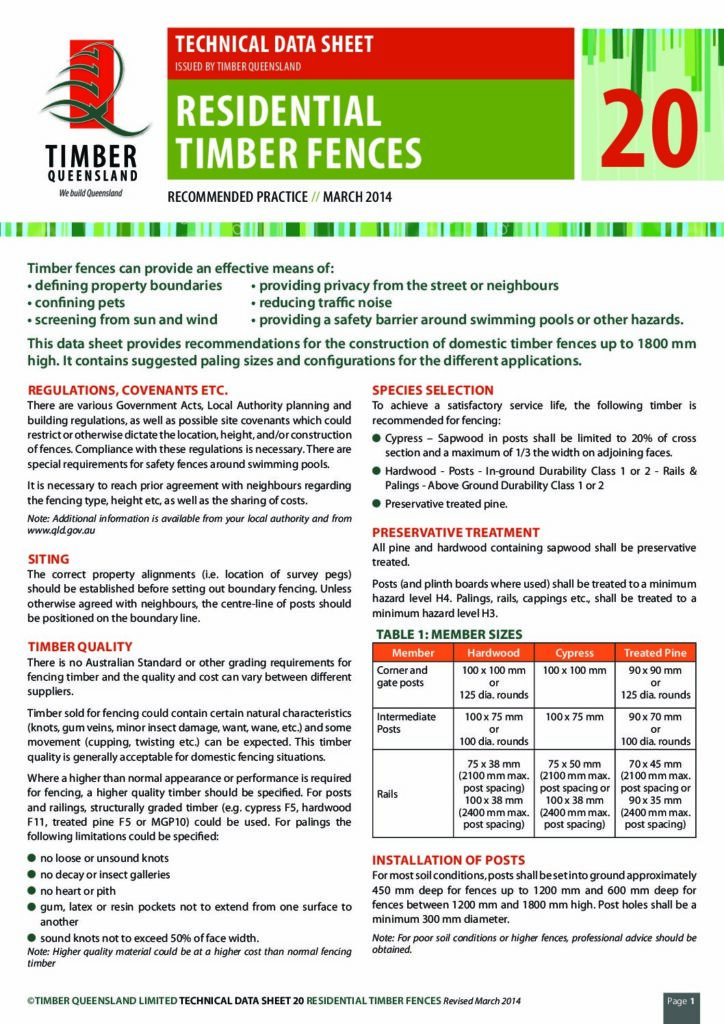
This data sheet provides recommendations for the construction of domestic timber fences up to 1800 mm
high. It contains suggested paling sizes and configurations for the different applications. | ||
|
|
pdf |
1,002 KB |
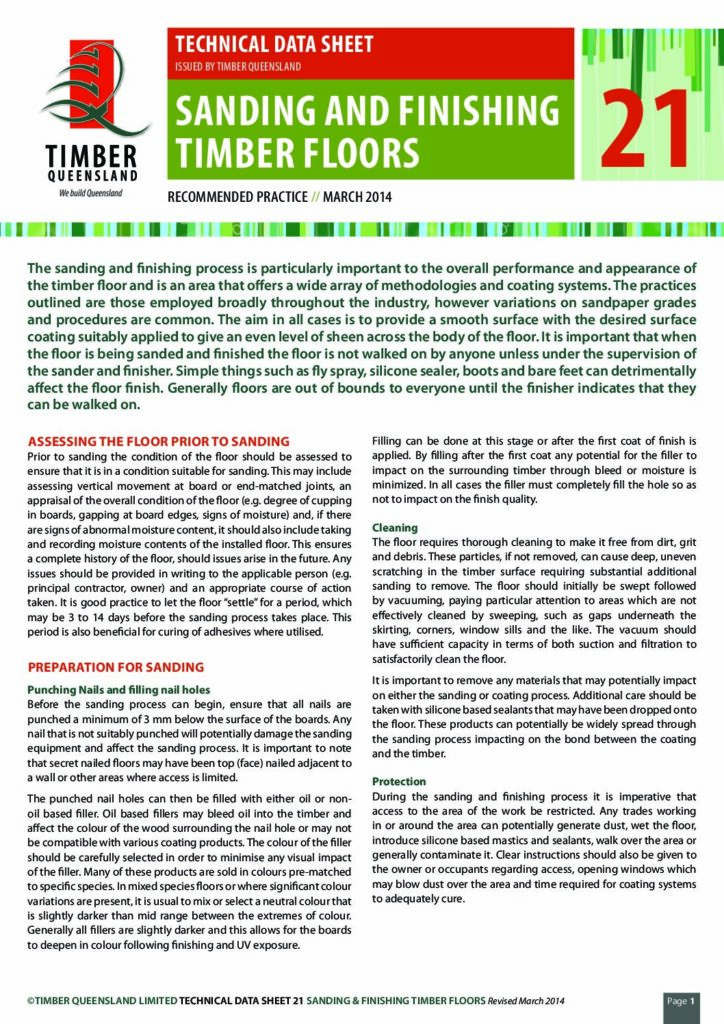
The sanding and finishing process is particularly important to the overall performance and appearance of
the timber floor and is an area that offers a wide array of methodologies and coating systems. The practices
outlined are those employed broadly throughout the industry, however variations on sandpaper grades
and procedures are common. | ||
|
|
pdf |
1,002 KB |
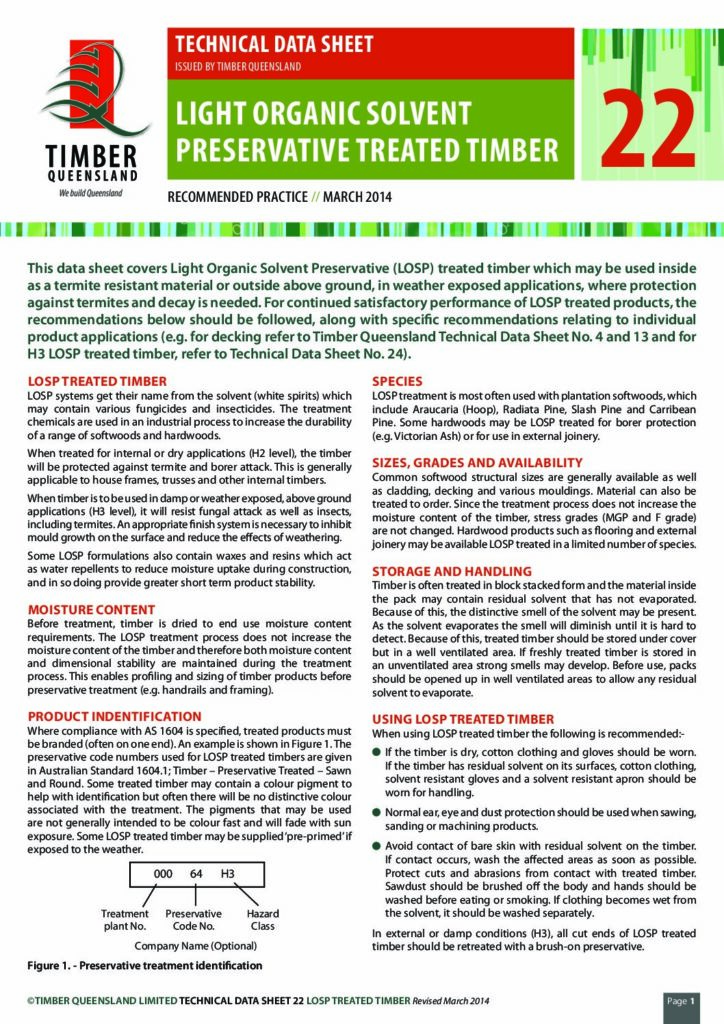
This data sheet covers Light Organic Solvent Preservative (LOSP) treated timber which may be used inside
as a termite resistant material or outside above ground, in weather exposed applications, where protection
against termites and decay is needed. | ||
|
|
pdf |
1 MB |
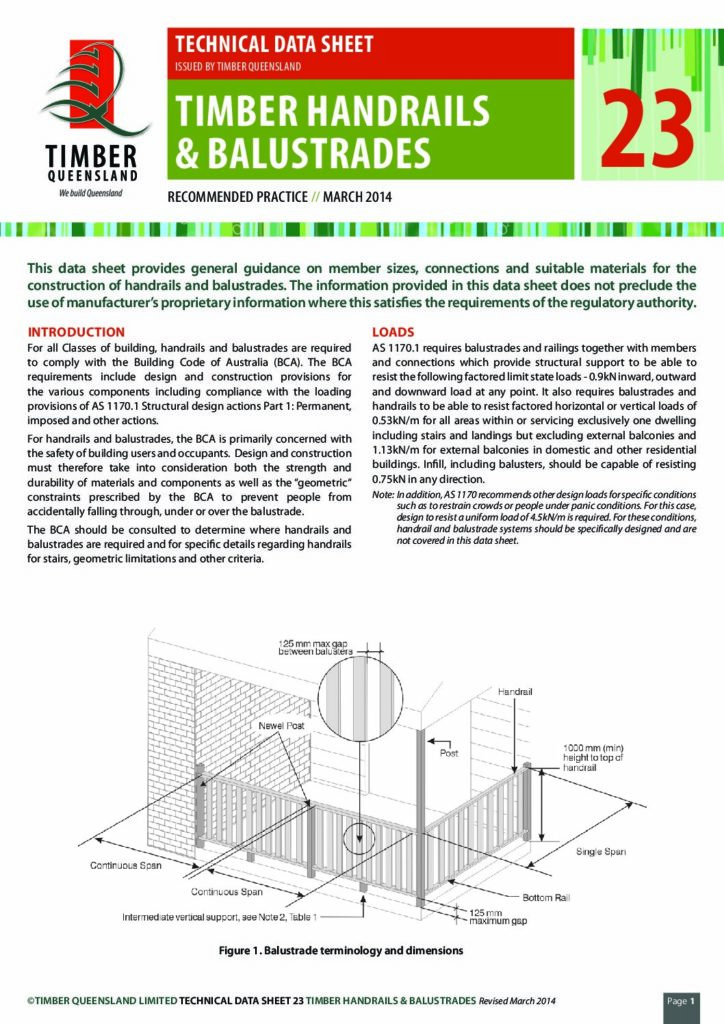
This data sheet provides general guidance on member sizes, connections and suitable materials for the
construction of handrails and balustrades. The information provided in this data sheet does not preclude the
use of manufacturer’s proprietary information where this satisfies the requirements of the regulatory authority. | ||
|
|
pdf |
2 MB |
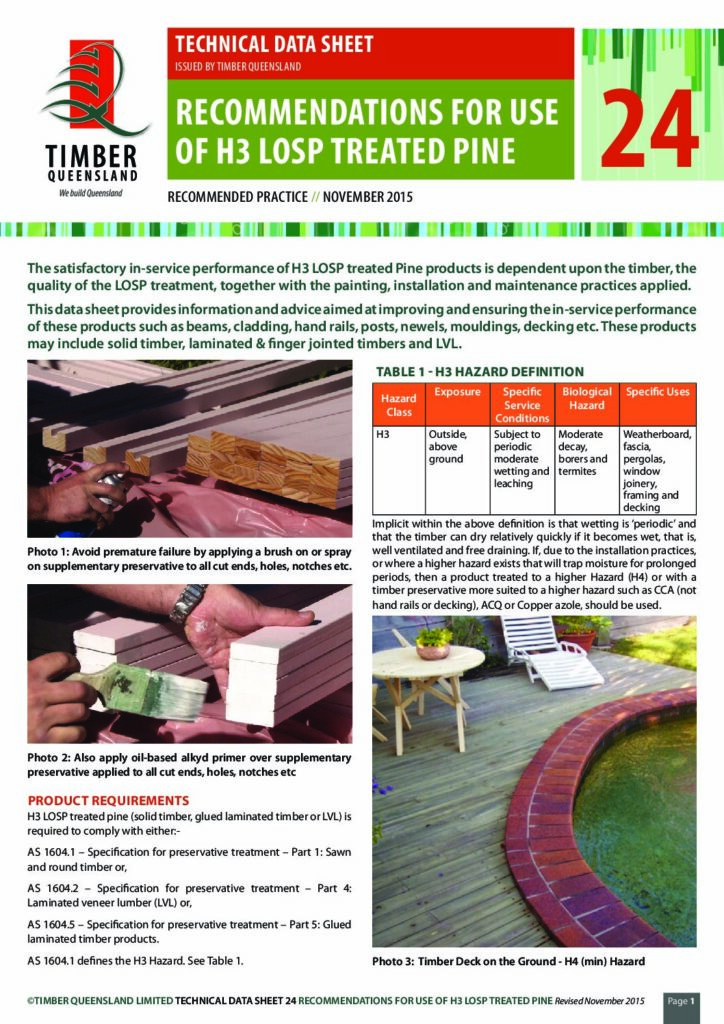
This data sheet provides information and advice aimed at improving and ensuring the in-service performance
of these products such as beams, cladding, hand rails, posts, newels, mouldings, decking etc. These products
may include solid timber, laminated & finger jointed timbers and LVL. | ||
|
|
pdf |
1 MB |
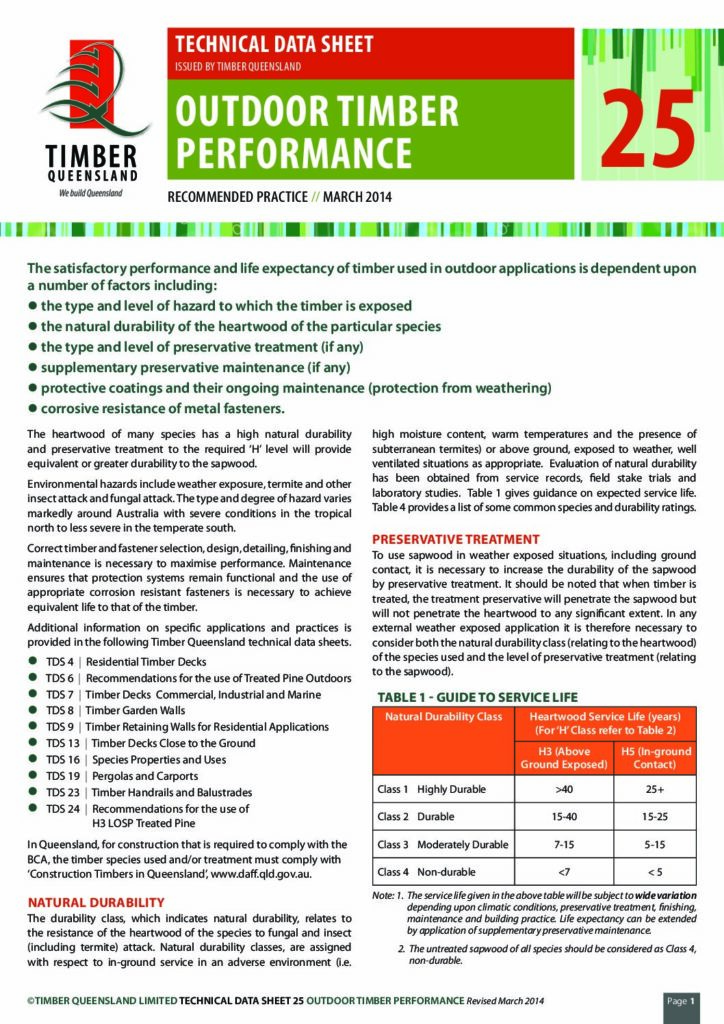
The satisfactory performance and life expectancy of timber used in outdoor applications is dependent upon
a number of factors including: • the type and level of hazard to which the timber is exposed • the natural durability of the heartwood of the particular species • the type and level of preservative treatment (if any) • supplementary preservative maintenance (if any) • protective coatings and their ongoing maintenance (protection from weathering) • corrosive resistance of metal fasteners. | ||
|
|
pdf |
1 MB |
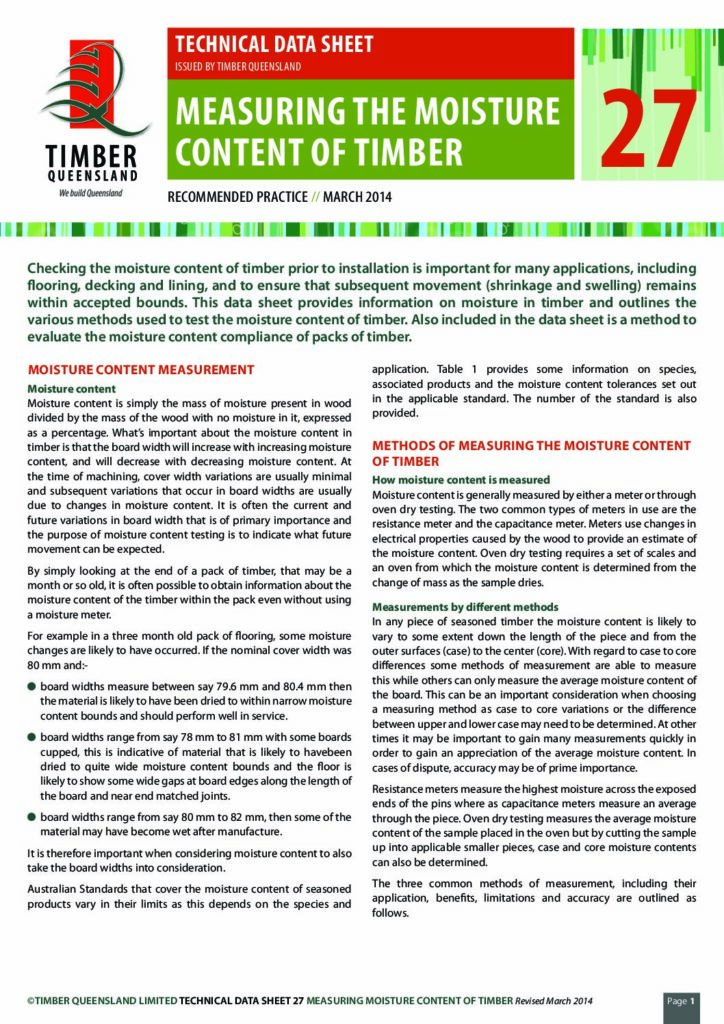
This data sheet provides information on moisture in timber and outlines the
various methods used to test the moisture content of timber. Also included in the data sheet is a method to
evaluate the moisture content compliance of packs of timber. | ||
|
|
pdf |
1 MB |
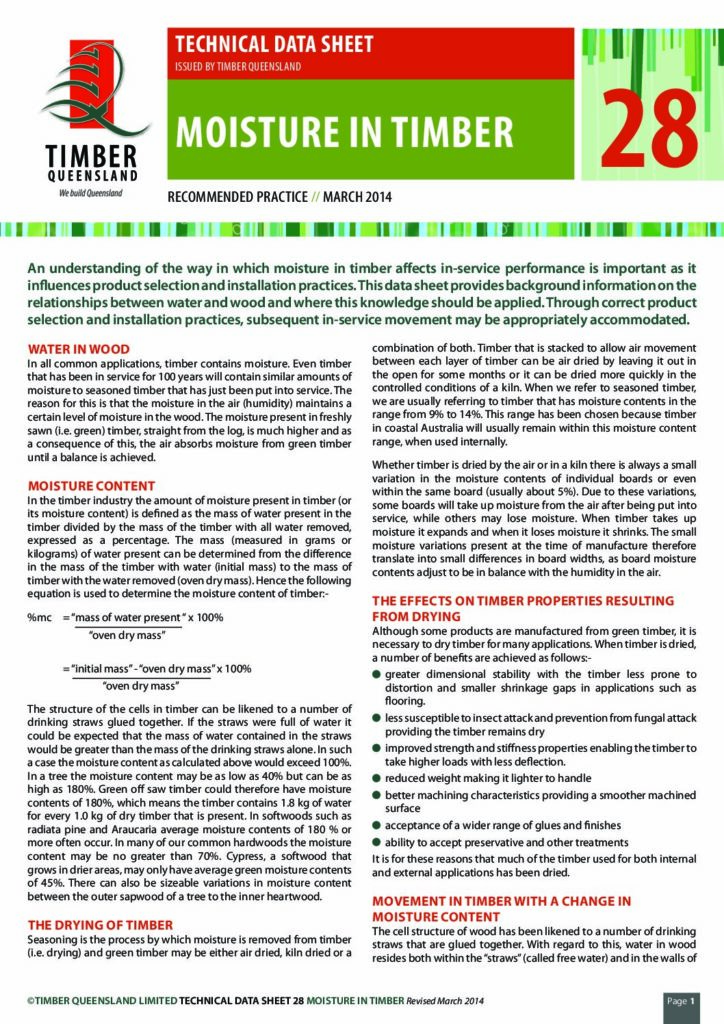
This data sheet considers applications where movement associated with moisture content changes needs
to be considered and should be accommodated for at the time of design, specification and installation. | ||
|
|
pdf |
1 MB |
This data sheet considers applications where movement associated with moisture content changes needs
to be considered and should be accommodated for at the time of design, specification and installation. | ||
|
|
pdf |
1,015 KB |
For Class 2 to 9 buildings (not applicable to Class 1a houses), the Building Code of Australia (BCA) has
requirements for assessing the fire hazard properties of:
(a) floor materials and floor coverings; and
(b) wall and ceiling linings | ||
|
|
pdf |
1 MB |
Floors of the same species can differ markedly in their appearance depending on timber source, age of
the tree, board cover width, the finish system used and the lighting in which the floor is viewed. Timber is
a natural product that will shrink and swell in response to changes in atmospheric humidity, no building
environment is the same as another, the sanding and finishing is not undertaken in a dust free factory
environment and finishes may darken with time. Even with these variables a high standard in the finished
floor is achievable. | ||
|
|
pdf |
3 MB |
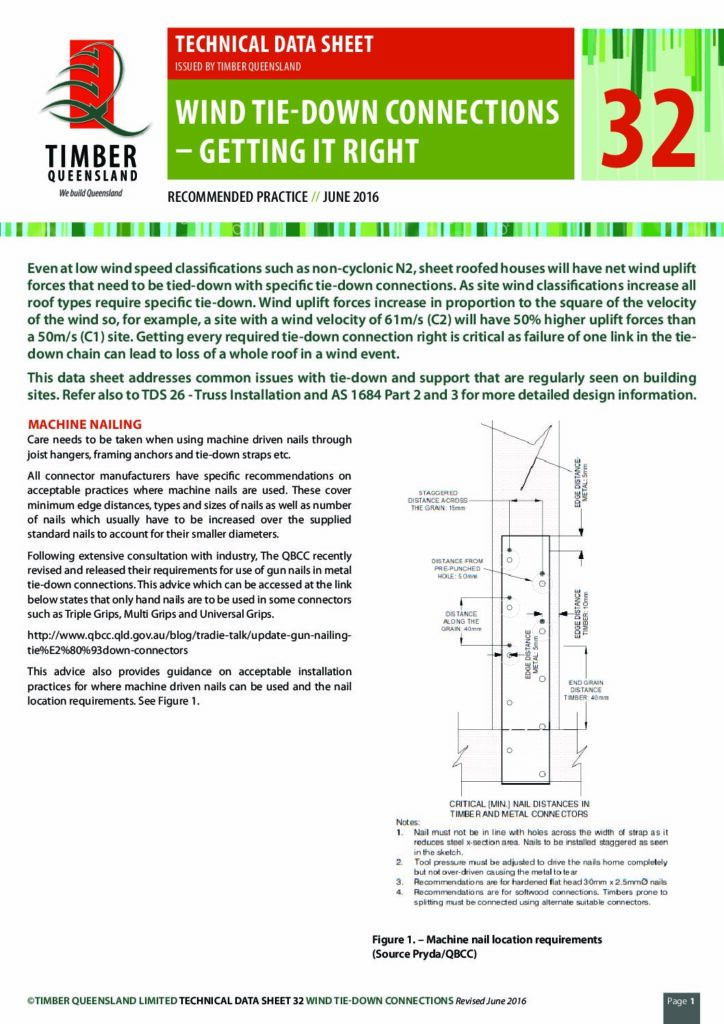
This data sheet addresses common issues with tie-down and support that are regularly seen on building
sites. Refer also to TDS 26 - Truss Installation and AS 1684 Part 2 and 3 for more detailed design information. | ||
|
|
pdf |
2 MB |
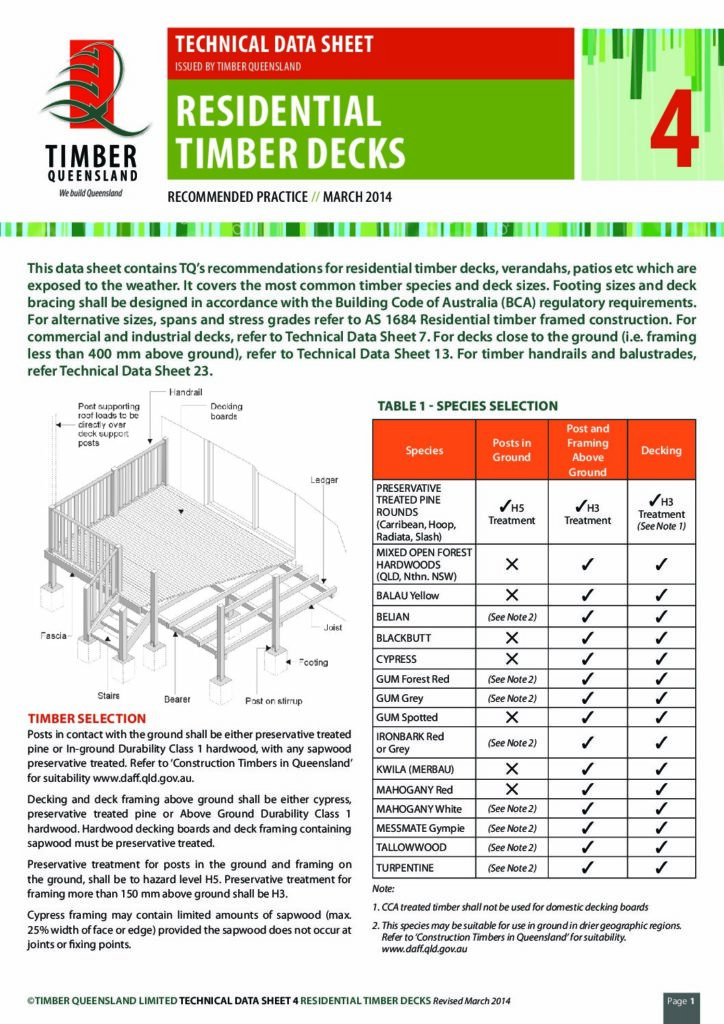
This data sheet contains TQ’s recommendations for residential timber decks, verandahs, patios etc which are
exposed to the weather. It covers the most common timber species and deck sizes. Footing sizes and deck
bracing shall be designed in accordance with the Building Code of Australia (BCA) regulatory requirements. | ||
|
|
pdf |
1 MB |
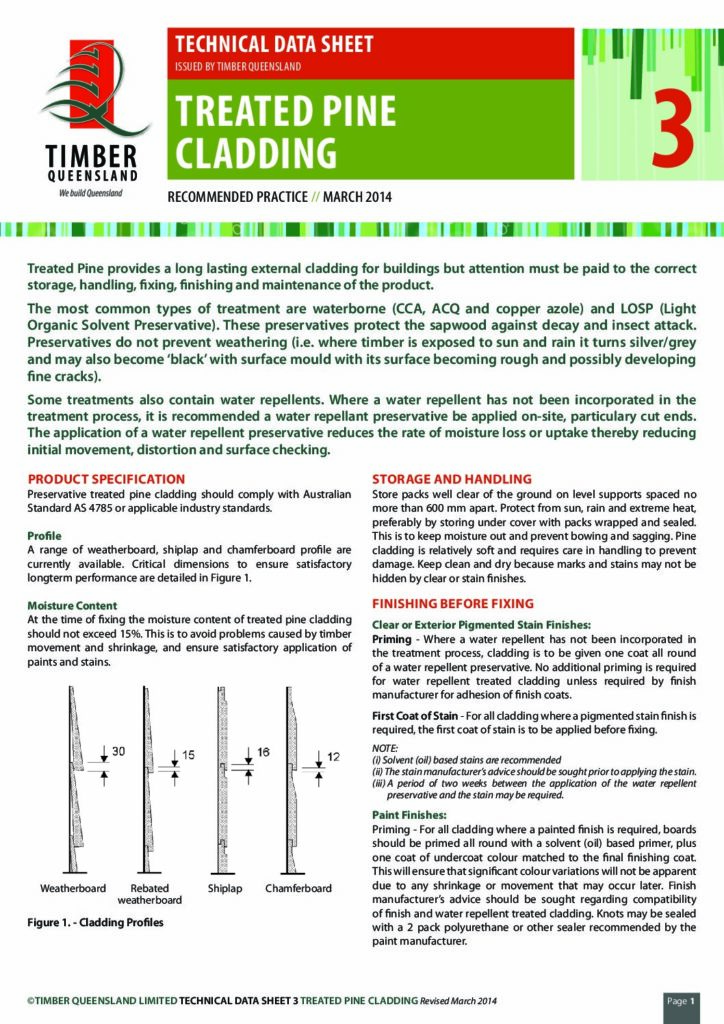
Treated Pine provides a long lasting external cladding for buildings but attention must be paid to the correct
storage, handling, fixing, finishing and maintenance of the product. | ||
|
|
pdf |
1,009 KB |
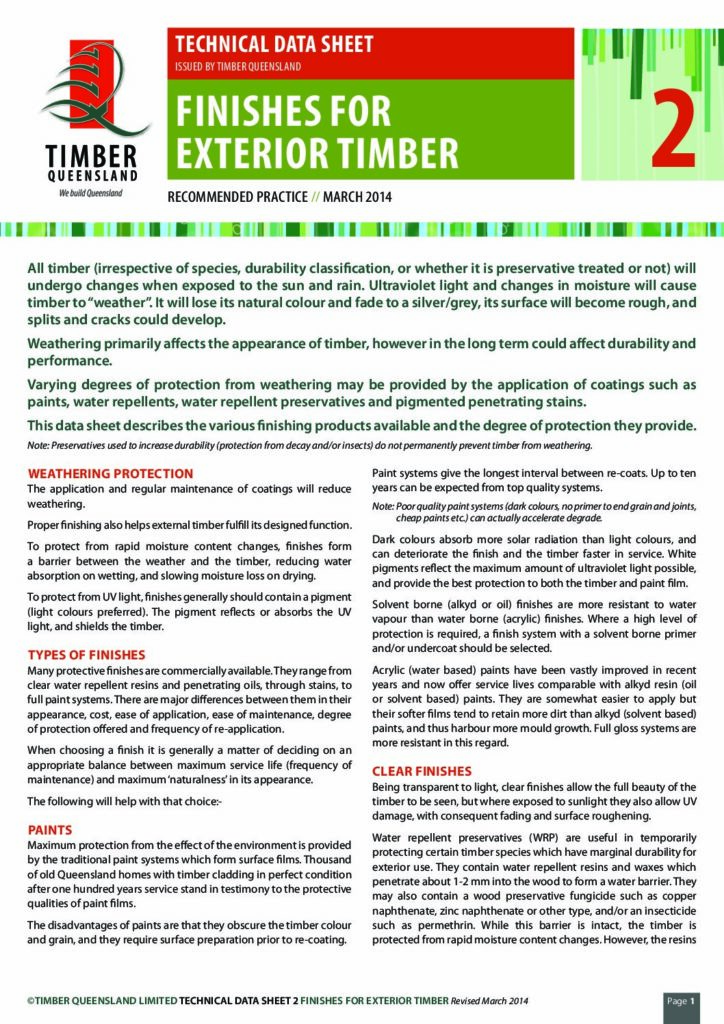
All timber (irrespective of species, durability classification, or whether it is preservative treated or not) will
undergo changes when exposed to the sun and rain. Ultraviolet light and changes in moisture will cause
timber to “weather”. It will lose its natural colour and fade to a silver/grey, its surface will become rough, and
splits and cracks could develop. | ||
|
|
pdf |
1 MB |
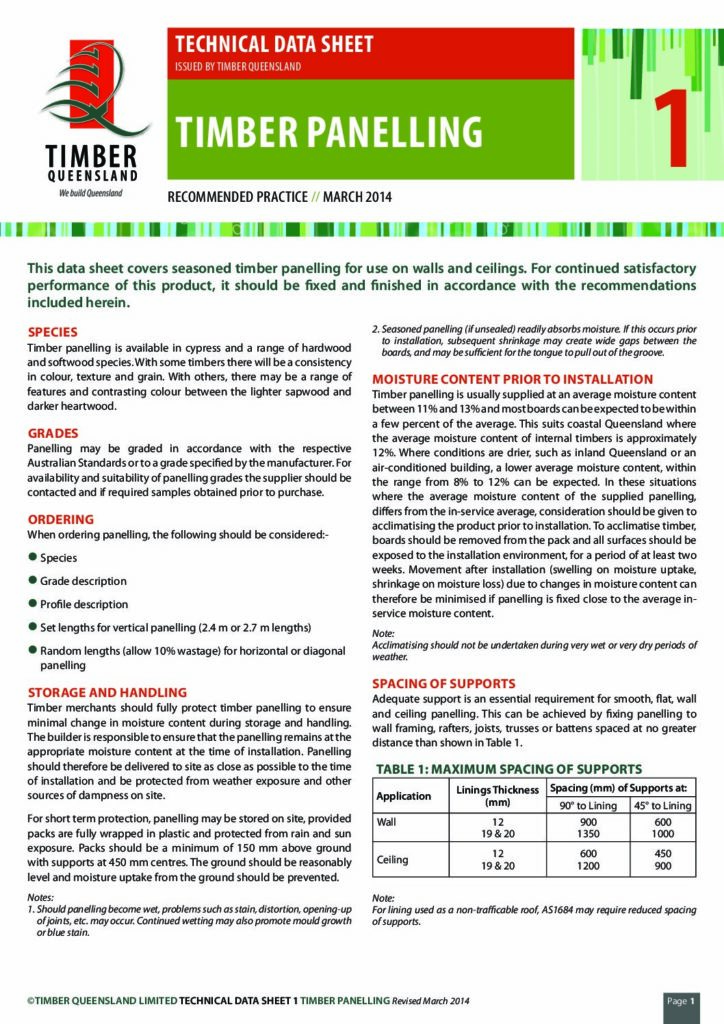
This data sheet covers seasoned timber panelling for use on walls and ceilings. For continued satisfactory performance of this product, it should be fixed and finished in accordance with the recommendations included herein. |